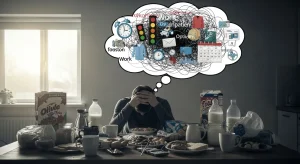

Dialectical Behavior Therapy teaches you to handle big emotions without self-destructive behavior.
What DBT Addresses
Some people feel intense emotions. A minor disappointment feels crushing. A small criticism cuts deep. Excitement becomes overwhelming. The intensity is exhausting.
These intense emotions lead to behaviors that provide temporary relief but long-term harm. Self-injury, substance use, impulsive decisions, rage, or withdrawal. You do something to stop the pain in the moment, but the consequences persist.
DBT was developed for people who struggle with emotion regulation. If your emotions feel out of control, if they lead to behaviors you regret, DBT can help.
The Four Core Skills
DBT teaches four skill sets. Each addresses a different aspect of emotional regulation & functioning.
Mindfulness forms the foundation. It means paying attention to the present moment without judgment. Your mind usually lives in the past or future. Mindfulness brings you back to now.
When you’re mindful, you observe thoughts & feelings without getting swept away. You notice “I’m having the thought that I’m worthless” instead of believing you are worthless. This distance creates space to respond rather than react.
Mindfulness isn’t about clearing your mind. It’s about paying attention on purpose. You can be mindful of washing dishes, walking, or sitting in traffic.
Distress Tolerance helps you survive crises without making things worse. When emotions peak, you want relief immediately. Distress tolerance skills give you alternatives to destructive behaviors.
These skills don’t make pain disappear. They help you ride it out until it decreases on its own. All emotions, no matter how intense, eventually subside.
Crisis survival strategies include: distraction through activities, self-soothing with the five senses, improving the moment with imagery or meaning, & thinking of pros & cons before acting.
Reality acceptance skills acknowledge what is, rather than fighting it. Radical acceptance means accepting reality completely, not partially. This doesn’t mean approval. It means acknowledging what’s true so you can respond effectively.
Emotional Regulation teaches you to manage emotions. You learn what triggers emotions, what they communicate, & how to shift them when needed.
Emotions provide information. Anger signals a boundary was crossed. Sadness signals something that matters to you. Fear signals you need to prepare. The problem isn’t having emotions. It’s when they’re so intense they interfere with your life.
Skills include: identifying & naming emotions, reducing vulnerability to emotional mind through self-care, checking facts to ensure emotions fit situations, & using opposite action when emotions don’t fit facts.
Opposite action means doing the opposite of what emotion tells you. If sadness says withdraw, you reach out. If fear says avoid, you approach. This shifts emotional intensity.
Interpersonal Effectiveness helps you get needs met while maintaining relationships & self-respect. Many people sacrifice their needs to please others or demand their needs be met regardless of others’ feelings.
Skills teach you to ask for what you want clearly, say no when needed, handle conflict constructively, & maintain boundaries. You assert yourself without aggression. You cooperate without losing yourself.
DEAR MAN is a skill for making requests: Describe the situation, Express feelings, Assert needs, Reinforce the positive, stay Mindful, Appear confident, Negotiate.
GIVE maintains relationships: be Gentle in approach, act Interested, Validate the other person, use an Easy manner.
FAST protects self-respect: be Fair, don’t Apologize excessively, Stick to values, be Truthful.
How to Practice DBT Skills
Skills training happens through individual therapy or group sessions. Groups provide support & accountability. Individual therapy focuses on applying skills to your specific situations.
Diary cards track your use of skills & target behaviors. Each day you record emotions, urges, behaviors, & which skills you used. This accountability keeps you engaged between sessions.
Behavioral chain analysis breaks down problem behaviors. When you engage in self-destructive behavior, you analyze what led to it. This reveals patterns. Once you see the chain, you can interrupt it.
Practice happens daily. You don’t just learn about skills. You use them repeatedly until they become automatic. Reading about mindfulness doesn’t help. Practicing mindfulness changes how you respond to emotions.
Applying Skills to Real Situations
When emotions spike, use distress tolerance. Crisis survival strategies get you through without making things worse. The TIPP skill works quickly: Temperature (cold water on face), Intense exercise, Paced breathing, Paired muscle relaxation.
When relationships are difficult, use interpersonal effectiveness. DEAR MAN helps you make requests clearly. GIVE helps you maintain connection. FAST protects your self-respect.
When you notice emotions building, use emotional regulation. Check the facts: does your emotion fit the situation? If anxiety is screaming danger but you’re actually safe, use the opposite action. Approach instead of avoiding.
When your mind is spinning, use mindfulness. Observe thoughts without engaging them. Describe what’s happening without judgment. Participate fully in the current activity.
What DBT Requires
DBT takes commitment. Skills take time to learn & longer to become automatic. You need to practice daily, attend sessions consistently, & persist through difficult periods.
Standard DBT lasts about a year. You move through all four skill modules twice. This repetition reinforces learning & allows you to deepen practice.
Some people see improvement in months. Others need the full year or longer. Severity of symptoms, consistency of practice, & life circumstances all affect the timeline.
The work is worth it. People who complete DBT report feeling more in control of emotions, better relationships, & reduced self-destructive behaviors.
Getting Started
DBT focuses on teaching skills you use immediately. Working on real situations you’re facing helps. Troubleshooting when skills don’t work as expected helps.
Individual sessions last 50 minutes weekly. You review your week, analyze problem behaviors, & practice skills. Skills groups meet for 2-2.5 hours weekly in programs that offer them.
Emotional control is learnable. Impulses can be managed. Crises can be survived without self-destruction. These aren’t abstract hopes. They’re outcomes people achieve through DBT.