
Anxiety Therapy - Live Life Now

Reclaim Your Calm
Anxiety keeps you in overdrive. We teach you how to slow down your system & regain control of your thoughts, body, & reactions.
How Anxiety Feels
Anxiety isn’t just worry. It’s a full-system alarm that won’t turn off.
Your mind races. Thoughts jump from one concern to another. You think about what could go wrong, what you should have done differently, what disaster might be waiting around the corner. The thoughts come fast, overlapping, relentless. You try to stop them, but they keep coming.
Your body stays tense. Shoulders tight, jaw clenched, stomach knotted. You might not notice until someone points it out or until the tension becomes pain. Headaches, back pain, digestive issues follow. Your body is preparing for danger that isn’t there.
Sleep becomes difficult. You lie awake replaying conversations, planning for problems that might never happen, feeling your heart race for no clear reason. When you do sleep, it’s light & disrupted. You wake up tired.
Constant alert mode defines your days. You scan for threats. You prepare for worst-case scenarios. You stay vigilant, even in safe situations. Your nervous system treats a work presentation like a physical threat. It treats a social gathering like a survival situation.
Dread settles in before events. Even things you used to enjoy trigger anticipatory anxiety. You spend days worrying about something that will last an hour. The dread often feels worse than the actual event.
Avoidance becomes a coping mechanism. You skip events that make you anxious. You avoid conversations that might be uncomfortable. You stay home instead of going out. Each avoidance provides temporary relief but strengthens the anxiety long-term.
Social fears show up in specific ways. You worry about being judged, saying something wrong, looking foolish. In groups, you monitor yourself constantly. After interactions, you replay them, analyzing every word for mistakes. You assume people noticed your anxiety & judged you for it.
Panic attacks can emerge. Your heart pounds, you can’t catch your breath, you feel dizzy or disconnected. You might think you’re dying or losing control. These episodes pass, but the fear of having another one creates more anxiety.
Physical symptoms mirror medical conditions. Chest tightness makes you worry about your heart. Shortness of breath makes you think something is wrong with your lungs. You might visit doctors repeatedly, seeking explanations for symptoms that stem from anxiety.
The condition feeds itself. You’re anxious, which makes you worry about being anxious, which increases anxiety. The cycle builds until it feels impossible to break.
You’re not alone in this. Anxiety disorders affect millions. They’re among the most common mental health conditions, & they respond well to treatment.

How We Break Down Anxiety
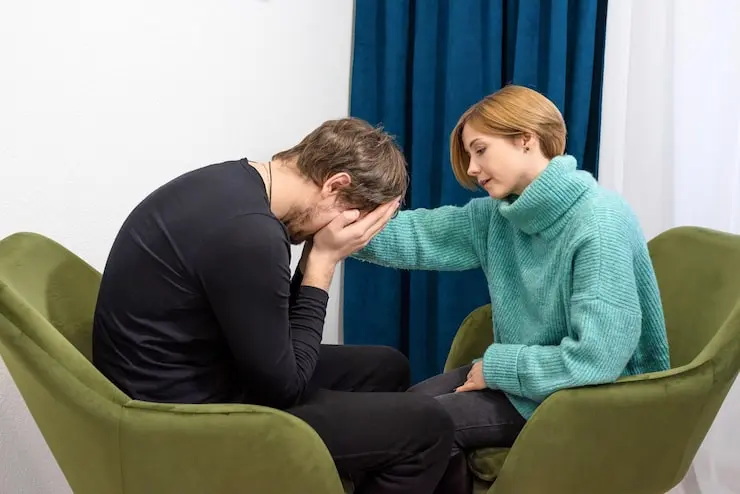
We don’t just tell you to relax. That doesn’t work. We teach you specific techniques that change how your nervous system responds.
Understanding Your Anxiety
comes first. We map out what triggers your anxiety, how it shows up in your body & mind, & what patterns keep it going. This isn’t about blaming yourself. It’s about getting clear on what’s happening so we can address it.
Cognitive Techniques
help with racing thoughts. Anxiety creates thinking patterns: catastrophizing, jumping to worst-case scenarios, overestimating danger, underestimating your ability to cope. We teach you to notice these patterns as they happen. You learn to examine thoughts instead of accepting them as truth. You ask: Is this thought based on evidence or anxiety? What else could be true? What would I tell a friend thinking this way?
Breathing & Grounding Tools
calm your nervous system. When anxiety spikes, your breathing changes. Shallow, rapid breaths signal danger to your brain, which triggers more anxiety. We teach you breathing techniques that activate your parasympathetic nervous system, the brake pedal for your stress response. We also teach grounding exercises that bring you back to the present moment when your mind spirals into future fears.
Exposure Work
addresses avoidance. This doesn’t mean forcing yourself into terrifying situations. It means gradually facing what you’ve been avoiding, in a controlled way. You start small. If social situations trigger anxiety, you might begin with a brief interaction. If leaving home causes panic, you start by standing outside your door. Each small step proves to your brain that the feared outcome doesn’t happen. Over time, the anxiety reduces.
Worry Management Strategies
contain anxious thinking. Some people benefit from scheduled worry time: designating 15 minutes a day to worry, then postponing worries that arise outside that window. Others benefit from writing worries down instead of ruminating on them. We find what works for your brain.
Social Skills Training
helps with social anxiety. You learn how to enter conversations, what to do when you feel self-conscious, how to handle awkward moments. You practice these skills in session before using them in real life.
Panic Management
gives you tools for when anxiety peaks. You learn what’s happening physiologically during a panic attack & why it isn’t dangerous. You learn techniques to ride out the wave instead of fighting it, which paradoxically makes it pass faster.
Lifestyle Factors
matter too. Sleep deprivation increases anxiety. Caffeine can trigger panic. Lack of exercise leaves stress hormones circulating in your system. We address these factors alongside therapy techniques.
Mindfulness & Acceptance Approaches
teach you a different relationship with anxiety. Instead of trying to eliminate anxious thoughts & feelings, you learn to notice them without reacting. You observe anxiety like weather passing through, rather than something you must fight or fix.
The goal isn’t to never feel anxious. Anxiety serves a purpose. It alerts you to genuine threats & motivates you to prepare for challenges. The goal is to right-size your anxiety response so it matches actual danger levels, & to have tools that work when anxiety spikes beyond what’s helpful.
Therapy Techniques We Use
We primarily use cognitive-behavioral therapy (CBT) for anxiety. Research shows CBT produces lasting changes in how people respond to anxiety triggers. It’s structured, skills-based, & effective.
We also incorporate acceptance & commitment therapy (ACT) principles. ACT teaches you to accept anxiety while still taking action toward what matters. Instead of waiting until anxiety disappears to live your life, you learn to move forward with anxiety present.
For specific phobias or trauma-related anxiety, we might use exposure therapy or EMDR. The approach depends on what’s driving your anxiety.


What Sessions Cover
Each session builds on the last. Early sessions focus on assessment & education. You learn what anxiety is, how it functions, & why your particular symptoms show up the way they do.
Middle sessions teach skills. You learn techniques in session, practice them during the week, & report back on what worked. We troubleshoot what didn’t work & adjust as needed.
Later sessions focus on application. You’re using skills in real-world situations, facing situations you’ve avoided, & building confidence in your ability to manage anxiety.
We work at your pace. Some people dive into exposure work quickly. Others need more time building foundational skills first. Both approaches work.
Sessions last 50 minutes. Initially, weekly sessions work best. As you improve, we might spread them out every other week.
You’ll have homework. Anxiety treatment requires practice between sessions. The more you use the skills, the faster they become automatic.
Common Questions About Anxiety Therapy
Will therapy make my anxiety disappear?
Therapy teaches you to manage anxiety, not eliminate it completely. Some anxiety is normal & protective. It motivates you to prepare for important events, alerts you to genuine risks, & keeps you safe. The issue isn’t anxiety itself. It’s when anxiety becomes excessive, constant, or interferes with your life. Therapy brings it back to functional levels.
Do I need to relive traumatic events?
Not necessarily. We work at your pace & focus on what helps you now. If trauma underlies your anxiety, addressing it can help. But we don’t push you into material you’re not ready to process.
How quickly will I feel better?
Many people notice changes within 4-6 sessions. You might sleep better, feel less on edge, or handle a situation that previously triggered panic. Significant improvement typically takes 12-16 sessions. Some people need more time, especially if anxiety has been present for years.
What if I have panic attacks?
Panic attacks respond well to treatment. You’ll learn why they happen, what’s occurring in your body, & techniques to manage them. Most people see a reduction in frequency & intensity of panic attacks within weeks of starting treatment.
Can I do therapy if I'm on medication?
Yes. Therapy & medication work well together. Some people need both. Others find therapy alone is sufficient. We coordinate with your prescriber to ensure integrated care.
What if my anxiety is about real problems?
Anxiety often attaches to real concerns: finances, health, relationships, work. Therapy doesn’t dismiss these concerns. It helps you respond to them more effectively. When you’re not consumed by anxiety, you can actually address problems more clearly.

Take the First Step
Peace of mind is possible. Anxiety feels permanent, but it responds to treatment. You can learn to manage your thoughts, calm your body, & face situations you’ve been avoiding.
The work requires effort. You’ll practice skills, face discomfort, & push against avoidance patterns. But the payoff is substantial. People who complete anxiety treatment report feeling more in control, less overwhelmed, & more capable of handling whatever life brings.
We have the frameworks, the techniques, & the experience. You bring the willingness to try.
Your first session involves assessment. We’ll discuss your symptoms, what triggers them, how they affect your life, & what you’ve tried already. From there, we create your treatment plan.
Start here.
Client Testimonials

“I was skeptical about therapy. I had tried a few therapists in the past and didn’t feel seen. But here, I found someone who really got it. We talked about my anxiety around work performance, but also about being a Black man navigating stress and expectations. It’s been a game-changer. I don’t just cope—I’m growing.”
“What stood out to me was the empathy and skill of my therapist. I’ve struggled with perfectionism and shame for most of my adult life. Through therapy and the skills lab sessions, I finally learned how to soothe my inner critic. I feel like I can breathe again. Therapy didn’t fix me—it helped me meet myself with kindness.”
“Therapy helped me understand patterns I was blind to—especially in relationships. I used to push people away before they could hurt me. Now I see how fear was driving me, and I’ve started building real, open connections. I didn’t expect to feel so supported. I’m grateful I gave this space a chance.”
“I began therapy because I felt constantly overwhelmed and unsure of my place in the world. My therapist helped me make sense of my anxiety and gave me real tools to cope. The mindfulness work we did together shifted how I relate to myself. I no longer feel broken—I feel human.”
“I came in feeling numb and disconnected. Years of pushing down emotions had left me empty. Through therapy, I started to understand my emotional world for the first time. I even learned how to talk about feelings with my teenage son. That’s something I never thought I’d be able to do.”
“I work in a helping profession, so I thought I should have it all figured out. But therapy showed me that even caregivers need care. I loved the blend of compassion and structure my therapist brought. The two-hour sessions were particularly transformative—they gave me time to unpack and rebuild.”
“For years, I thought my relationship issues were just bad luck. But therapy helped me understand attachment styles, boundaries, and my own patterns. I learned to stop chasing unavailable people and start showing up for myself. It’s been deeply healing.”
“I never thought I’d be someone who goes to therapy. But I hit a wall and couldn’t keep pretending everything was fine. From the first session, I felt a deep respect and safety here. We unpacked years of suppressed grief and stress. I’ve come out stronger, not just mentally, but emotionally and spiritually too.”
“As a young woman dealing with depression and identity confusion, therapy gave me a place to speak freely. I no longer feel like I’m faking confidence. I’ve found my voice, and for the first time, I actually feel like I belong in my own life.”