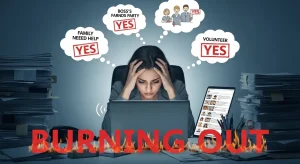
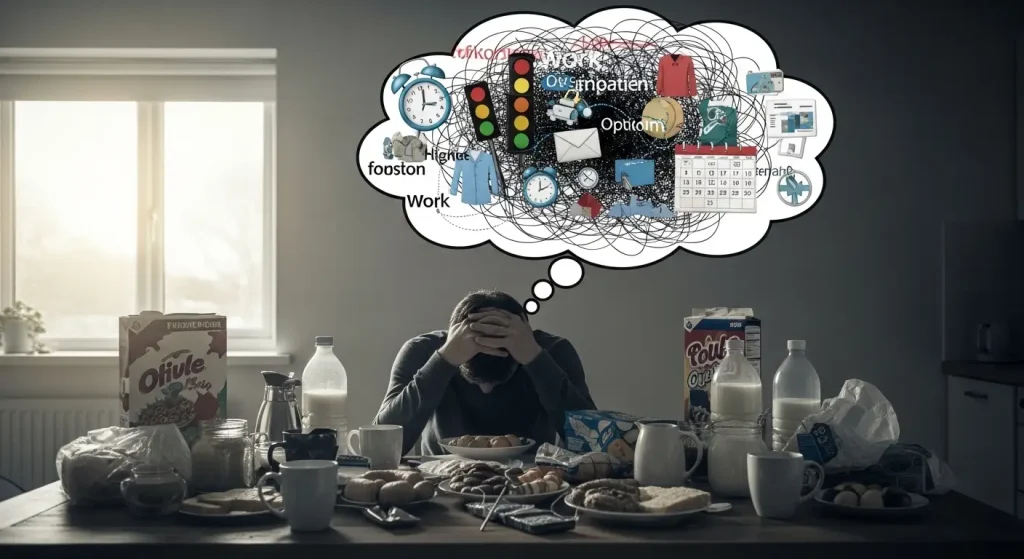
Most people think exhaustion comes from doing too much.
But in reality, a major cause of modern burnout isn’t physical labor—it’s something far more invisible:
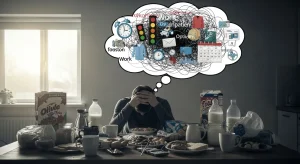
From the moment you wake up, your brain starts working:
- What should I wear?
- What should I eat?
- Should I reply now or later?
- Is this the right choice?
By the time the day is halfway through, your mental energy feels drained—even if you haven’t done anything “hard.”
This is called decision fatigue, and it has a powerful impact on mental health.
1. What Is Decision Fatigue?
Decision fatigue is the mental exhaustion that comes from making too many choices in a short period of time.
Your brain has a limited supply of cognitive energy. Every decision—even small ones—uses that energy.
So by the end of the day:
- decisions feel harder
- patience decreases
- emotional reactions increase
- motivation drops
It’s not laziness.
It’s mental depletion.
2. Why the Brain Struggles With Choices
The brain is constantly trying to:
- evaluate options
- predict outcomes
- reduce risk
- avoid regret
Even simple decisions like:
- choosing food
- replying to messages
- planning tasks
require micro-level processing.
Now multiply that by 50–100 decisions per day.
Your brain becomes overloaded.
3. The “Mental Battery” Effect
Think of your brain like a phone battery.
Each decision drains a small percentage:
- small choices → low drain
- emotional choices → medium drain
- complex decisions → high drain
By evening, your “battery” is low, and you experience:
- irritability
- procrastination
- indecision
- emotional sensitivity
This is why people often feel worse at night.
4. Why Modern Life Makes It Worse
Decision fatigue is much worse today because we have:
- endless options
- constant notifications
- social media comparisons
- career pressure
- information overload
Even choosing what to watch on Netflix becomes stressful.
Too many options = cognitive overload.
5. Signs You’re Experiencing Decision Fatigue
You may notice:
- avoiding simple decisions
- saying “I don’t care” frequently
- delaying tasks unnecessarily
- feeling overwhelmed by small choices
- emotional outbursts from minor stress
A key sign:
you feel mentally tired without physical effort
6. The Hidden Link With Anxiety and Stress
Decision fatigue often overlaps with anxiety.
Why?
Because anxiety increases:
- overthinking
- fear of wrong choices
- need for reassurance
So even small decisions feel dangerous.
This creates a loop:
- anxiety → more decisions feel stressful
- more decisions → more fatigue
- fatigue → more anxiety
7. Why Indecision Feels So Heavy
When your brain is tired:
- it struggles to evaluate options
- it seeks “perfect” answers
- it avoids commitment
So you may:
- delay decisions
- switch choices repeatedly
- feel stuck
Indecision is often not confusion—it’s mental exhaustion.
8. How to Reduce Decision Fatigue
1. Automate small decisions
- meal planning
- outfits
- routines
2. Limit daily choices
Reduce unnecessary decisions:
- fewer apps
- fewer options
- fewer interruptions
3. Make important decisions earlier
Your brain is sharper in the morning.
4. Create default systems
Example:
- same breakfast weekdays
- fixed workout time
- set work blocks
9. Emotional Impact of Decision Fatigue
Over time, it can lead to:
- burnout
- irritability
- loss of motivation
- emotional numbness
- reduced confidence
Because constant decision pressure drains not just energy—but emotional resilience too.
Final Thought
Decision fatigue is not a personality flaw—it’s a cognitive limit.
When your brain is forced to make too many choices without rest, it naturally slows down.
And the solution isn’t “trying harder.”
It’s reducing unnecessary decisions so your mind has space to think clearly again.