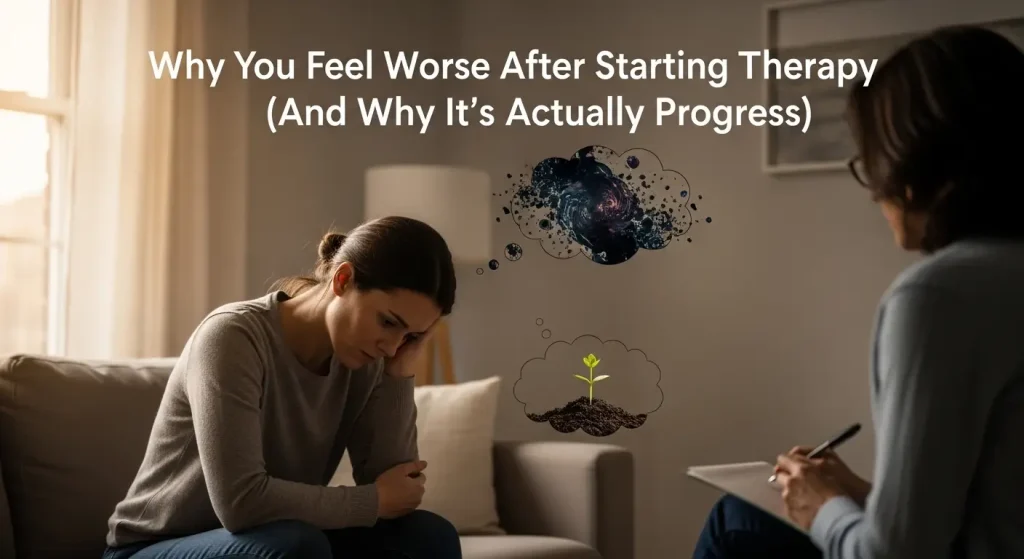
Starting therapy is often imagined as a relief—like finally opening a door and instantly feeling lighter. But many people experience the opposite at first: they feel more emotional, more anxious, sometimes even worse than before.
That reaction can be confusing. Some people even think, “Therapy is making me worse, maybe I should stop.” But in reality, this phase is not a setback—it’s often a sign that real change has begun.
Let’s break down why this happens.
1. You’re Finally Feeling What You’ve Been Avoiding
Before therapy, most people cope by:
- suppressing emotions
- staying busy
- intellectualizing problems
- avoiding painful memories
These strategies don’t remove pain—they just delay it.
When therapy begins, those defenses slowly weaken. Emotions that were “paused” start coming up.
So instead of getting worse, what’s actually happening is:
You’re finally feeling what was already there
2. Your Brain Is Reorganising Old Patterns
Therapy doesn’t just talk about problems—it changes how your brain processes them.
When you start:
- old memories become more accessible
- emotional associations get activated
- suppressed thoughts surface
This is part of neuroplasticity—your brain rewiring itself.
But rewiring always feels unstable at first.
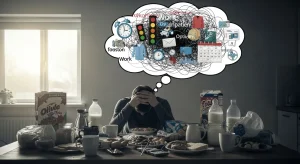
Think of it like reorganizing a messy room:
- before: everything is hidden but “manageable”
- during: everything is out in the open
- after: things are clearer and structured
The “messy middle phase” feels worse—but it’s temporary.
3. You Lose Old Coping Mechanisms Before New Ones Fully Form
One of the most overlooked parts of therapy is this:
You stop using old coping habits before new ones fully replace them.
For example:
- you stop avoiding emotions
- but haven’t yet mastered emotional regulation
- you stop people-pleasing
- but haven’t built boundaries yet
This creates a short-term emotional imbalance.
It can feel like:
- increased anxiety
- mood swings
- confusion
- emotional sensitivity
But it’s actually a transition phase, not decline.
4. You’re Becoming Honest With Yourself
A lot of emotional discomfort in therapy comes from honesty.
You may start realizing:
- “This relationship hurts me”
- “I’ve been living on autopilot”
- “I don’t actually like my coping habits”
Awareness is powerful—but it can feel heavy.
Because now you can no longer unsee things.
And that temporary emotional discomfort is the cost of clarity.
5. Emotional Contrast Becomes Stronger
Before therapy:
- everything feels “normal” even if unhealthy
After therapy begins:
- you start noticing what feels off
This creates contrast:
- good vs unhealthy
- safe vs unsafe
- healthy vs familiar
Suddenly, things you tolerated feel unbearable.
That doesn’t mean your situation changed overnight—it means your awareness changed first.
6. You’re Breaking Long-Term Emotional Numbing
Many people don’t realize they’ve been emotionally numb for years.
Numbness can look like:
- “I’m fine” even when you’re not
- lack of emotional highs or lows
- feeling disconnected
Therapy slowly thaws that numbness.
And when emotions return, they can feel intense.
But intensity is not damage—it’s reconnection.
7. Why This Phase Is Actually a Good Sign
If therapy is making you feel worse temporarily, it often means:
✔ You’re no longer avoiding yourself
✔ Your emotions are coming back online
✔ Your brain is processing old pain
✔ Change is actively happening
Stagnation feels comfortable—but it doesn’t heal anything.
Discomfort, in this context, often means:
progress is in motion
8. How to Navigate This Phase
If you’re going through this, here’s what helps:
- go slower in therapy if needed
- communicate openly with your therapist
- don’t judge emotional reactions
- rest after sessions
- avoid making big life decisions mid-process
- focus on grounding techniques
Most importantly:
don’t confuse discomfort with failure
Final Thought
Therapy doesn’t make life worse—it makes what was already unprocessed finally visible.
At first, that visibility feels overwhelming.
But over time, clarity replaces confusion, and emotional weight starts to settle into understanding.
And that’s when real healing begins.