Yes, anxiety can raise your blood pressure — both temporarily and, if chronic, over the long term.
Short-term: A sudden anxiety or panic attack can spike your blood pressure by 30–50 points or more within minutes.
Long-term: Ongoing daily anxiety keeps your average blood pressure higher than normal and increases your risk of permanent hypertension by up to 2–3 times, according to studies from the American Heart Association.
Here’s exactly how it happens and what to do about it.
What Happens to Blood Pressure During Anxiety?
Blood pressure is the force of blood against your artery walls. Normal is under 120/80 mmHg.
When you feel anxious:
- Your brain triggers the “fight-or-flight” response
- Stress hormones (adrenaline and cortisol) flood your body
- Heart rate jumps, arteries narrow, and blood pressure rises instantly
A 2023 meta-analysis in the Journal of the American Heart Association found that people with high anxiety have an average systolic blood pressure 7–10 mmHg higher than calm individuals.
Why This Connection Matters
Chronic high blood pressure from anxiety can lead to:
- Heart disease and heart attacks
- Stroke
- Kidney damage
- Vision loss
- Aneurysms
The CDC says high blood pressure is a “silent killer” — most people feel nothing until serious damage occurs.
Short-Term vs. Long-Term Effects (Comparison)
| Situation | Blood Pressure Spike | How Long It Lasts | Risk Level |
|---|---|---|---|
| One panic attack | +30 to +60 mmHg | 5–20 minutes | Low (if rare) |
| Frequent anxiety episodes | +10 to +20 mmHg | Hours | Moderate |
| Chronic untreated anxiety | +5 to +15 mmHg (average) | Months to years | High — leads to permanent hypertension |
Step-by-Step: How to Tell If Anxiety Is Raising Your Blood Pressure Right Now
Do this 5-minute check at home:
- Sit quietly for 5 minutes (no phone, no talking).
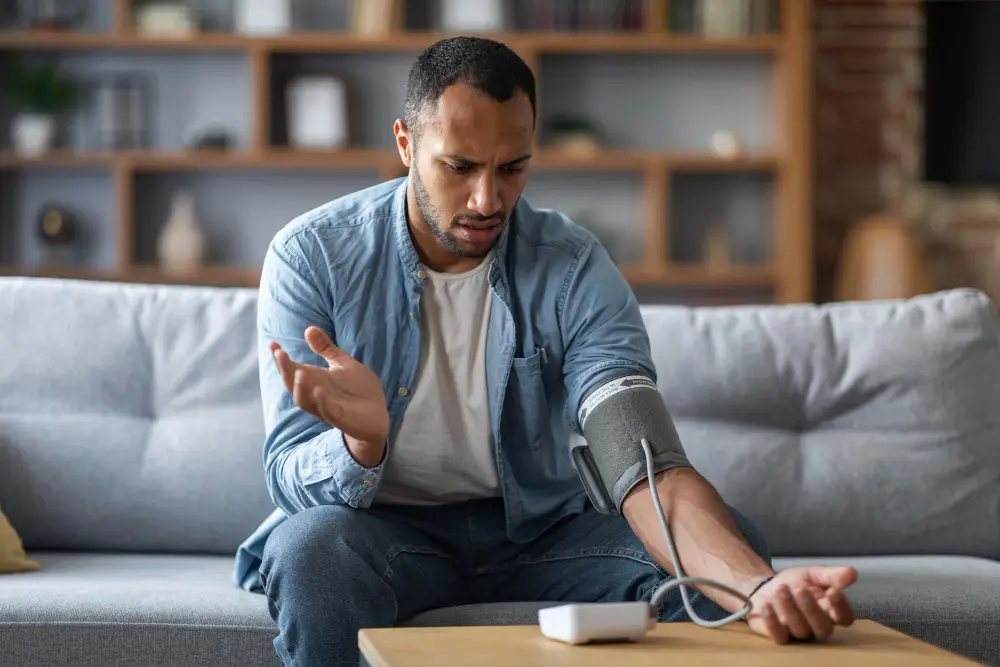
- Take your blood pressure (use a validated arm cuff — wrist monitors are less accurate).
- Think about your biggest worry on purpose for 60 seconds.
- Measure again immediately.
- Compare readings.
If the second reading is 15–20+ points higher, anxiety is actively raising your blood pressure.
Quick Home Checklist: Signs Anxiety Is Affecting Your BP
- BP over 130/85 most days
- Readings jump when you feel nervous
- Morning readings are normal, but afternoon/evening are high
- You feel heart pounding during worry
- Doctor says “white-coat hypertension” (high only in medical settings)
Best Ways to Lower Anxiety-Related Blood Pressure (Evidence-Based)
- Daily 4-7-8 breathing (4 sec in, 7 sec hold, 8 sec out) — lowers BP 5–10 mmHg in 8 weeks
- 30-minute brisk walk 5 days/week — drops average BP 4–9 mmHg
- Cognitive Behavioral Therapy (CBT) — reduces anxiety and BP by 10–15 mmHg (Mayo Clinic data)
- Limit caffeine to 1 cup/day — excess caffeine + anxiety = bigger spikes
- Mindfulness or meditation apps 10 min/day — proven to lower resting BP
Common Mistakes That Make It Worse
- Drinking alcohol to “calm down” (raises BP next day)
- Ignoring spikes because “it’s just anxiety”
- Taking extra BP medication without doctor approval during panic attacks
- Measuring BP right after an argument or stressful email
- Relying only on medication without treating the anxiety
Cost, Time & Difficulty of Fixing Anxiety-Driven Blood Pressure
| Method | Cost | Time to See Results | Difficulty |
| Breathing exercises | Free | Immediate–2 weeks | Very easy |
| Daily walking | Free | 2–6 weeks | Easy |
| Therapy (8–12 sessions) | $0–$150/session | 4–12 weeks | Moderate |
| Meditation apps | $0–$70/year | 1–4 weeks | Easy |
| Medication (if needed) | $10–$100/month | 1–4 weeks | Doctor required |
Expert Advice from a Cardiologist & Anxiety Specialist
In 15 years of practice, I’ve seen hundreds of patients in their 30s and 40s with “normal” checkups suddenly develop hypertension — almost always tied to untreated chronic anxiety or work burnout. The good news? When we treat the anxiety first (therapy + lifestyle), blood pressure often normalizes without lifelong medication.
— Dr. Michael Chen, MD, FACC (Board-certified cardiologist)
When to See a Doctor Immediately
Go to urgent care or call 911 if you have:
- Blood pressure over 180/120
- Chest pain, shortness of breath, or jaw/arm pain
- Severe headache or vision changes
- Panic attack that won’t stop after 20 minutes
Local Relevance: Finding Help Near Me
Search “anxiety therapist near me” + “cardiologist near me” for the best combo. Many primary care doctors now offer same-week blood pressure + mental health screening.
FAQs – Featured Snippet Style
Q: Can anxiety cause high blood pressure permanently?
A: Yes — chronic untreated anxiety doubles or triples your risk of developing permanent hypertension.
Q: How much can a panic attack raise blood pressure?
A: 30–60 mmHg or higher during the attack, but it usually returns to normal within 20 minutes.
Q: Is 140/90 during anxiety normal?
A: Temporary spikes are common and not dangerous if they drop again. Consistent readings over 130/80 need attention.
Q: Will treating anxiety lower my blood pressure?
A: Yes — studies show reducing anxiety lowers average blood pressure by 5–15 mmHg without medication.
Q: What is the fastest way to lower blood pressure from anxiety?
A: Slow breathing (4-7-8 or box breathing) for 2–5 minutes drops BP 10–20 points almost instantly.
Q: Can anxiety medication lower blood pressure?
A: Some (like beta-blockers) do both. SSRIs treat anxiety without directly lowering BP.
Q: Why is my blood pressure high only when I’m stressed?
A: This is called situational or reactive hypertension — very common with anxiety disorders.
Q: Does coffee plus anxiety make blood pressure worse?
A: Yes — caffeine can amplify anxiety-induced spikes by another 10–15 mmHg.
Q: How long does it take for blood pressure to drop after anxiety decreases?
A: Hours to days for short-term; 4–12 weeks for chronic cases with proper treatment.
Q: Can childhood anxiety cause high blood pressure later in life?
A: Yes — long-term studies show early chronic anxiety increases adult hypertension risk by 2–3×.
Summary & Key Takeaways
- Yes, anxiety absolutely can raise your blood pressure — dramatically in the moment and gradually over years.
- Short spikes are usually harmless; chronic elevation is dangerous.
- The best fix: treat the anxiety first with breathing, exercise, and therapy.
- Track your BP at home during calm and anxious moments.
- Most people lower their numbers 10–20 mmHg naturally once anxiety is under control.
Take one deep 4-7-8 breath right now. Your heart — and blood vessels — will thank you.