To the outside world, you are the picture of success. You hit your deadlines, you remember your friends’ birthdays, and your house is (mostly) organized.
they don’t see what happens when you close your front door.
They don’t see you collapsing on the sofa, physically unable to speak because you used every ounce of energy just to “appear normal.” They don’t see the pile of laundry you’ve moved from the bed to the chair for three weeks. They don’t see the shame you feel when you lose your keys for the third time this morning.
If you have spent your life wondering, Why is everything so much harder for me than it is for everyone else? you aren’t lazy, and you aren’t crazy.
You might be a woman living with High-Functioning ADHD.
At Live Life Now Therapy, we see many brilliant women in the Atlanta area who are burning out because they are fighting a brain that is wired differently. This guide is your permission slip to stop hiding and start understanding your unique mind.
What Does High-Functioning Actually Mean?
The term High Functioning is misleading. It sounds like a compliment, but often, it is a cage.
In the mental health world, High Functioning doesn’t mean you aren’t suffering. It simply means you are suffering in silence. It means your external achievements are high, but the internal cost of maintaining them is astronomical.
For many women, undiagnosed ADHD looks like anxiety or depression. You might constantly feel overwhelmed, expecting the other shoe to drop, fearing that people will find out you are barely holding it together. This is often described as The Swan Effect: calmly gliding on the surface, but paddling furiously underneath just to stay afloat.
The Art of Masking: How Women Hide Their Struggles
Why is ADHD missed in so many women? Because girls are socialized to be good, quiet, and organized. To survive, you learned to Mask.
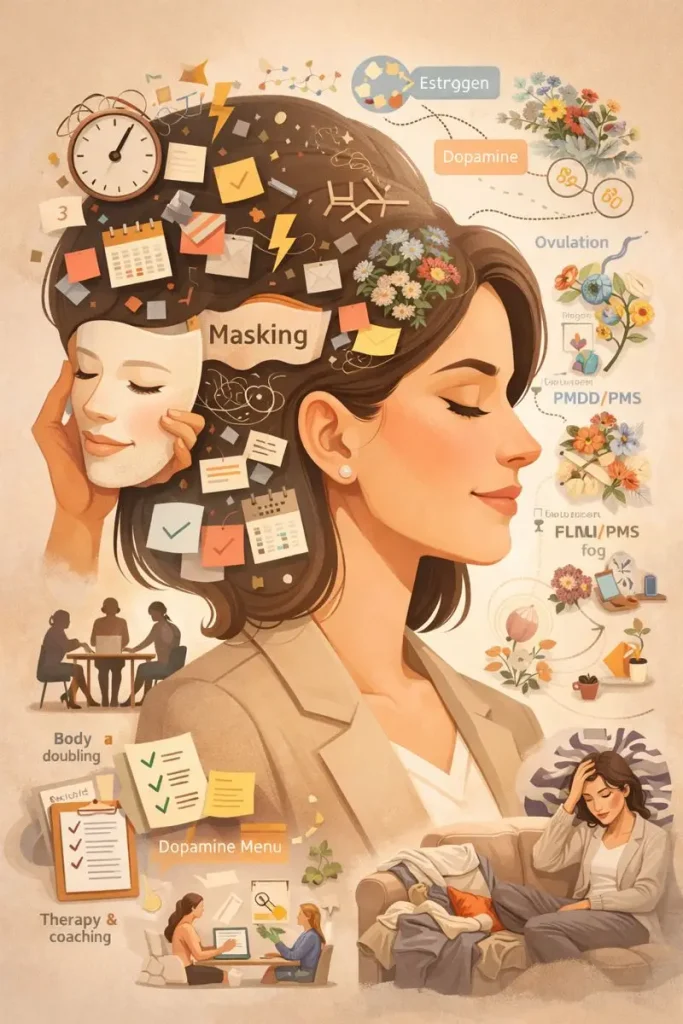
ADHD Masking is the subconscious process of suppressing your natural neurodivergent traits to fit into a neurotypical world.
Common Signs of Masking in Women:
- Obsessive Lists: You don’t just use a planner; you rely on it for survival. If you don’t write it down, it doesn’t exist.
- The “Perfect” Employee: You arrive 30 minutes early because you are terrified of being 5 minutes late (time blindness compensation).
- Social Scripting: You rehearse conversations in your head before having them so you don’t interrupt or say the “wrong” thing.
- Suppressing “Stims”: You force yourself to sit still in meetings, even though your body desperately wants to fidget or doodle to focus.
The Price You Pay: The 6 PM Crash
The biggest sign of masking isn’t what happens at work; it’s what happens after. When you get home, the mask comes off, and your brain shuts down. You might feel irritable, overstimulated by touch or noise, and unable to make simple decisions like what to eat for dinner. This is Restraint Collapse, and it is a hallmark of high-functioning ADHD.
Internal Hyperactivity: When the Chaos is Inside
The stereotype of ADHD is a hyperactive little boy running around a classroom. Because you weren’t running around, you were told you were a “daydreamer.”
In women, hyperactivity is often Internalized.
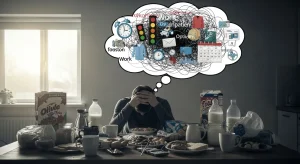
- The “Browser” Brain: Imagine a computer with 50 tabs open, 3 represent frozen, and stressful music is playing from somewhere you can’t find.
- Insomnia: Your body is tired, but your brain decides 11:00 PM is the perfect time to reorganize the pantry or worry about a conversation from 2014.
- Rejection Sensitive Dysphoria (RSD): You feel intense emotional pain when you perceive rejection or criticism. A slightly different tone in a text message can ruin your entire day.
The Missing Link: Hormones & Your Cycle
This is the piece of the puzzle most doctors miss. If you feel like your ADHD medication stops working or your focus completely vanishes once a month, it is not in your head. It is your hormones.
There is a direct link between Estrogen and Dopamine (the focus chemical deficient in ADHD brains).
Shutterstock
- Ovulation (High Estrogen): When estrogen is high, it boosts dopamine. You might feel like Superwoman focused, organized, and energetic.
- Luteal Phase/PMS (Estrogen Drop): In the week before your period, estrogen plummets. This causes dopamine to crash.
- The Result: Your ADHD symptoms (brain fog, irritability, fatigue) become severe. Many women are misdiagnosed with PMDD (Premenstrual Dysphoric Disorder) when it is actually hormonal exacerbation of ADHD.
The Grief of a Late Diagnosis
If you are reading this and realizing, “This is me,” you might feel relief. But you might also feel grief or anger.
- Why didn’t my teachers notice?
- Why did I struggle for so long thinking I was just lazy or stupid?
This grief is valid. Adult women often have to mourn the easier life they could have had if they were supported sooner. At Live Life Now Therapy, we help you process this grief so you can move from “What if” to “What now?”
Moving Forward: Tools That Actually Work
Standard advice like “just buy a planner” doesn’t work for the ADHD brain. You need strategies that work with your brain, not against it.
- Body Doubling: ADHD brains struggle to self start. Working alongside someone else (even silently) can provide the motivation to focus.
- Dopamine Menus: Instead of doom-scrolling when you need a break, create a menu of quick dopamine hits: a 3-minute dance party, petting the dog, or a cold glass of water.
- Cycle Syncing: If possible, schedule your most demanding deep work during ovulation and allow for more rest and administrative tasks during your PMS week.
How Therapy Helps You Unmask
You do not need to be “fixed.” You have a Ferrari engine; you just have bicycle brakes. Therapy helps you upgrade the brakes.
We use neurodivergent-affirming approaches to help you:
- Cognitive Behavioral Therapy (CBT): To challenge the “I’m lazy” narrative and build practical executive function skills.
- Trauma-Informed Care: To heal the shame of years of masking.
- Emotional Regulation: Learning to manage the intense highs and lows of RSD.
Conclusion: You Are Not Broken
Your ability to function at a high level is a strength, but it shouldn’t come at the cost of your mental health. You deserve to succeed without burning out every evening. You deserve to be understood.
If you are in Marietta, Dallas, GA, or the greater Atlanta area, let us help you navigate your neurodivergence with compassion.
FAQ
Q: Why is ADHD often missed in women?
A: Women often present with “inattentive” symptoms (daydreaming, disorganization) rather than physical hyperactivity. Additionally, women are socialized to mask their struggles, hiding the severity of their symptoms from teachers and doctors.
Q: Can ADHD get worse with age in women?
A: Yes. Hormonal changes, specifically perimenopause and menopause, cause a drop in estrogen, which can significantly worsen ADHD symptoms like brain fog and memory loss in mid life.
Q: Is it Anxiety or ADHD?
A: It is often both. However, anxiety is usually worry about the future, whereas ADHD anxiety stems from being overwhelmed by the present (e.g., I have so much to do and I can’t start).