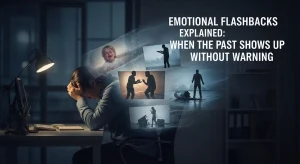
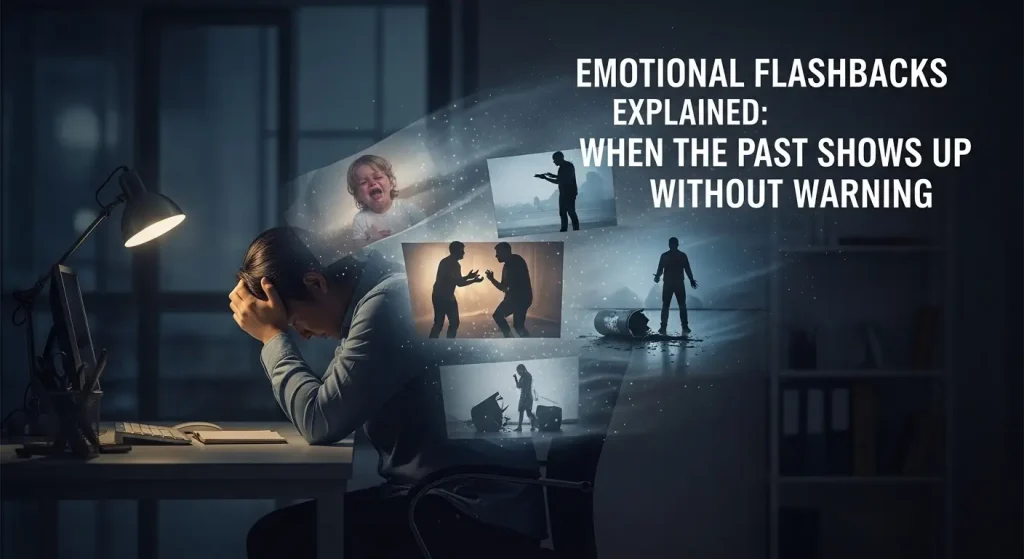
Sometimes people experience intense emotional reactions that don’t match what’s happening in the present.
A small comment feels like rejection.
A neutral tone feels like anger.
A simple situation suddenly triggers panic, shame, or sadness.
And the confusing part is:
“Nothing even happened… so why do I feel like this?”
This is often called an emotional flashback.
1. What Is an Emotional Flashback?
An emotional flashback is when:
- past emotional pain gets activated
- without a clear present-day threat
- and feels like it’s happening right now
Unlike visual flashbacks (like in PTSD movies), emotional flashbacks are subtle.
You don’t “see” the past—you feel it
Common emotions include:
- shame
- fear
- abandonment
- helplessness
- emotional overwhelm
2. Why Emotional Flashbacks Happen
They usually form when past experiences were:
- emotionally intense
- unresolved
- repeated over time
- not validated or processed
For example:
- childhood criticism
- emotional neglect
- unpredictable caregiving
- toxic relationships
- long-term stress
The brain stores these emotional patterns as “danger signals.”
Later, even small triggers can activate them.
3. What Triggers Emotional Flashbacks?
Triggers can be surprisingly small:
- someone’s tone of voice
- feeling ignored in conversation
- criticism (even mild)
- conflict or disagreement
- feeling misunderstood
- being alone unexpectedly
The present situation is just a “switch”—the reaction comes from the past.
4. Why You Don’t Realize It’s Happening
Emotional flashbacks are tricky because:
- they don’t feel like memories
- there’s no clear “image” of the past
- they feel like reality, not reaction
That’s why people often think:
- “Something is wrong with me”
- “This situation is worse than it is”
- “I’m overreacting but can’t stop it”
In reality:
your nervous system is reacting to old emotional data
5. The Nervous System Connection
Emotional flashbacks are deeply tied to the nervous system.
When triggered:
- the amygdala (fear center) activates
- the body shifts into fight, flight, or freeze
- logical thinking decreases
That’s why it feels overwhelming and hard to control.
Your body is reacting before your mind can analyze it.
6. What It Feels Like Internally
People describe emotional flashbacks as:
- sudden anxiety for “no reason”
- feeling small or powerless
- intense shame or sadness
- urge to escape or shut down
- emotional regression
You might even feel like a younger version of yourself emotionally.
7. How to Recognize It in the Moment
A helpful question is:
“Is my reaction bigger than what’s actually happening right now?”
If yes, it may be a flashback response.
Other clues:
- intensity feels out of proportion
- you can’t easily calm down
- you feel “stuck” in the emotion
- logic doesn’t reduce the feeling
8. How to Manage Emotional Flashbacks
Here are grounded strategies:
1. Name it
Say to yourself:
“This feels like a flashback response.”
2. Orient to the present
Look around and identify:
- where you are
- what year it is
- what is actually happening
3. Regulate your body
- slow breathing
- cold water on hands/face
- grounding through touch or movement
4. Don’t analyze deeply in the moment
Processing comes later—stabilization comes first.
9. Healing Emotional Flashbacks Long-Term
Therapy helps by:
- processing stored emotional memory
- building emotional regulation skills
- reducing trigger sensitivity
- strengthening self-awareness
Over time:
triggers lose intensity
reactions become shorter
clarity increases
Final Thought
Emotional flashbacks are not signs of weakness—they are signs that your nervous system is reacting to old emotional experiences that were never fully processed.
The present moment is not the problem.
It’s just the stage where the past temporarily echoes.
And with awareness and support, those echoes gradually lose their power.