When Trauma Feels Real All Over Again
Imagine walking through your home on a quiet night, and suddenly you hear footsteps behind you. You turn around nothing. Or perhaps you catch a quick flash of a traumatic memory, almost as if it’s happening right in front of you. For many people living with Post-Traumatic Stress Disorder (PTSD), these moments can feel startlingly real. They spark a big question that survivors often carry silently:
Can PTSD cause hallucinations, and if so, why does it happen?
PTSD already involves vivid symptoms like flashbacks, intrusive memories, and heightened alertness. But when those symptoms become sensory auditory, visual, or physical it can be confusing and even frightening. Many people don’t know whether what they’re experiencing is a normal part of trauma or a sign of something more serious.
In this article, we’ll explore the relationship between PTSD and hallucinations, why trauma can distort perception, how these experiences differ from psychosis, and what people commonly do to navigate them. This guide uses naturally integrated keywords like “PTSD hallucinations” and “can PTSD cause hallucinations” to support SEO without sacrificing readability.
What PTSD Really Is: A Brief, Clear Breakdown
PTSD develops after someone experiences or witnesses a deeply distressing or life-threatening event. Trauma affects how the brain processes memory, threat, and safety and sometimes, those effects linger long after the event is over.
People with PTSD often experience:
- Intrusive memories
- Flashbacks
- Nightmares
- Hyperarousal
- Emotional numbness or detachment
- Avoidance of reminders of the trauma
These symptoms are tied to changes in the amygdala (the brain’s alarm system), the hippocampus (memory processing), and the prefrontal cortex (reasoning and regulation). When someone becomes triggered, these systems can become overwhelmed.
This helps explain why certain PTSD symptoms feel incredibly real. The brain isn’t just remembering the trauma it’s reliving pieces of it.
And sometimes, the boundary between memory and perception becomes blurry.
Can PTSD Cause Hallucinations? The Short Answer
Yes, PTSD can be associated with hallucination-like experiences in some individuals.
But the explanation is more nuanced than a simple yes or no.
When people report hallucinations related to PTSD, they may be referring to:
1. Trauma Flashbacks
These are vivid re-experiences of the traumatic event. They can be visual, auditory, or even sensory. Flashbacks can feel like hallucinations because they pull someone mentally and emotionally into the past.
2. Intrusive Sensory Memories
Some people hear specific sounds linked to trauma or smell scents connected to the event. These aren’t hallucinations in a medical sense but rather sensory intrusions triggered by trauma recall.
3. Perception Distortions Due to Hypervigilance
When the brain is on high alert, it can misinterpret normal sounds or movements as threats. This can make harmless sensations feel ominous or exaggerated.
Here’s what’s important to understand:
Hallucinations in PTSD do not automatically indicate psychosis.
They are often tied directly to the traumatic experience rather than stemming from an unrelated mental condition.
Why Trauma Can Trigger Hallucination-Like Experiences
To understand why these experiences occur, it helps to look at how trauma affects the brain under stress.
1. The Brain Under Threat
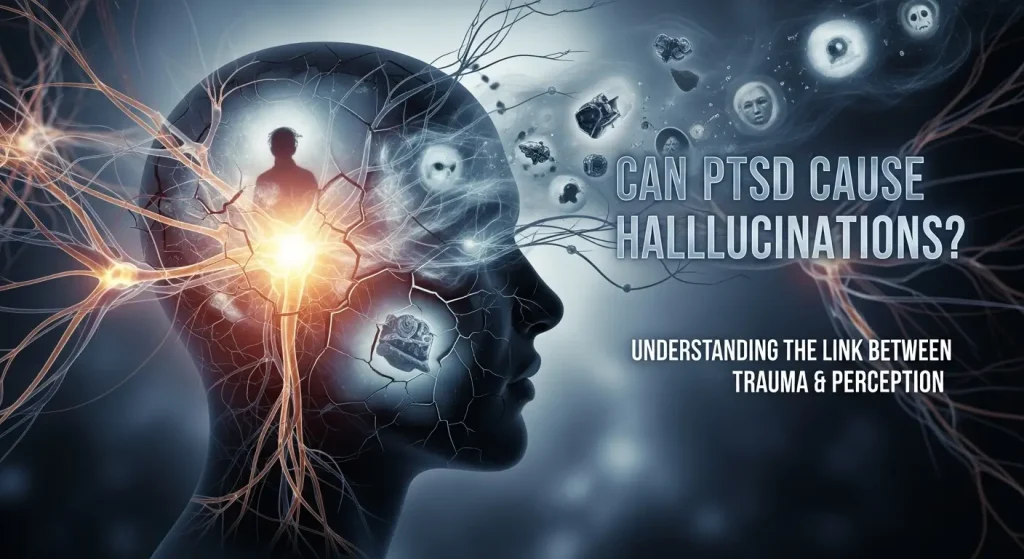
The amygdala becomes overactive, constantly scanning for danger. At the same time, the prefrontal cortex the part responsible for logical interpretation may become less active. This combination can make sounds sharper, flashes of light more alarming, and memories more intrusive.
2. Memory Fragmentation
Traumatic memories often store in fragments rather than as a cohesive story. When these fragments resurface, they may appear as sensory bursts images, smells, or sounds similar to hallucinations.
3. Hypervigilance and Misinterpretation
When someone is constantly on alert, the brain may fill in gaps or misread harmless cues as threats. For example, a creaking house might be interpreted as footsteps.
4. Dissociation
Dissociation can make the world feel unreal or distorted. When someone is detached from their surroundings, sensory distortions can feel amplified or unfamiliar.
Types of Hallucination-Like Experiences Reported in PTSD
Not all trauma-related perceptual experiences look the same. People commonly describe:
1. Auditory Experiences
Hearing sounds related to the trauma shouting, footsteps, doors, explosions, or voices associated with the event.
2. Visual Flashbacks
Seeing quick flashes of imagery or feeling as though the traumatic event is happening again.
3. Olfactory or Sensory Memories
Smelling smoke, feeling heat, or sensing a physical touch that mirrors the trauma.
These are often deeply tied to memory pathways.
4. Nightmares That “Bleed Into Waking”
After intense nightmares, some people experience moments of confusion or lingering imagery that can mimic hallucinations.
These experiences can be deeply unsettling but they are more common in trauma survivors than many realize.
PTSD Hallucinations vs. Psychosis: Understanding the Difference
Because hallucinations can occur in several mental health conditions, it’s important to understand how PTSD-related experiences differ from psychosis.
1. Content Relevance to Trauma
In PTSD, the hallucination-like experience almost always connects directly to the traumatic event. In psychosis, content may be unrelated or bizarre.
2. Awareness and Insight
People with PTSD often recognize that the experience is linked to trauma, even if it feels real. Insight is generally more preserved.
3. Frequency and Intensity
PTSD hallucinations often occur during high stress, flashbacks, or sleep-related disturbances not constantly or without trigger.
4. Context
PTSD symptoms tend to appear during emotional overwhelm, reminders of the trauma, or moments of high fear.
Psychosis is usually more persistent.
Important Clarification
Experiencing PTSD hallucinations does not mean someone has a psychotic disorder.
There is a condition known as trauma-related psychosis, but it is diagnosed and evaluated by mental health professionals on an individual basis.
What Often Triggers Hallucination-Like Symptoms in PTSD
Certain factors make sensory or perceptual symptoms more likely:
- Acute stress
- Sleep deprivation
- Flashback triggers
- Emotional overload
- Anxiety spikes
- Isolation
- Substance use or withdrawal
Understanding triggers helps people feel more prepared and less afraid when symptoms arise.
Healthy, Safe Ways People Navigate These Experiences
While every person’s experience is unique, many PTSD survivors find comfort in general grounding and supportive strategies, such as:
- Grounding techniques to bring attention back to the present
- Consistent routines that reduce overwhelm
- Identifying patterns and triggers
- Talking with a mental health professional for guidance
- Creating a crisis plan for moments of distress
- Leaning on safe people for emotional support
- Improving sleep hygiene to reduce nighttime distortions
- Recognizing that these experiences are not unusual for trauma survivors
These are not medical treatments, simply tools many people find helpful.
When to Seek Support
PTSD hallucinations or sensory distortions can feel overwhelming, confusing, or frightening. Speaking with a therapist or mental health professional can offer clarity, understanding, and structured support.
You might consider reaching out if:
- Symptoms feel unmanageable
- Fear or confusion increases
- Daily functioning becomes difficult
- You feel alone or unsure of what you’re experiencing
Reaching out is not a sign of weakness, it’s a sign of self-awareness and strength.
Conclusion — You’re Not Imagining It: Your Brain Is Trying to Protect You
PTSD can involve hallucination-like experiences, and while they may feel alarming, they are often rooted in trauma memories, hyperarousal, or dissociation, not psychosis. These symptoms can be understood, navigated, and managed with support.
Your brain is not malfunctioning, it’s responding to something deeply painful that happened to you. And understanding that is the first step toward healing.